When I asked people in my broad network what came to mind when they heard the term change management, the answers were thoughtful – but vague.
Words like training, communications, adoption, education and support.
It felt like watching people describe the surface of something without ever seeing its core.
That moment was like being handed a new pair of glasses after years of squinting.
It became clear how little clarity many organizations have about what change management resources actually bring to a project—and how poorly they have been explained when and why to use them.
Because here’s the truth: most organizations already have access to some form of change management.
The problem isn’t availability – it’s practical application.
Many leaders have change management resources nearby but aren’t sure when to engage them, what to ask of them, or how their work connects to delivery.

And that misunderstanding creates a quiet kind of waste – the kind that doesn’t show up on a dashboard but drains time, trust, and energy every single day.
The waste that doesn’t have to happen
It’s the waste that comes from:
- Endless back-and-forth because people weren’t engaged at the right time.
- Strained relationships caused by unclear communication or wrong assumptions.
- Meetings that should have been conversations, or decisions made without the people who will live with them.
You’ve probably heard it before — the frustration from those left out:
“I wish I’d been consulted.”
“No one told us about that discussion.” or “We could have flagged that early if anyone had asked.”And on the other side, the well-intentioned rationale from project teams:
“We just wanted to keep the group small.”
Both perspectives are understandable — but the disconnect they reveal is entirely avoidable when someone is paying attention to what people actually need to move forward.
That’s where change management comes in.
The Stakeholder Intelligence Engine
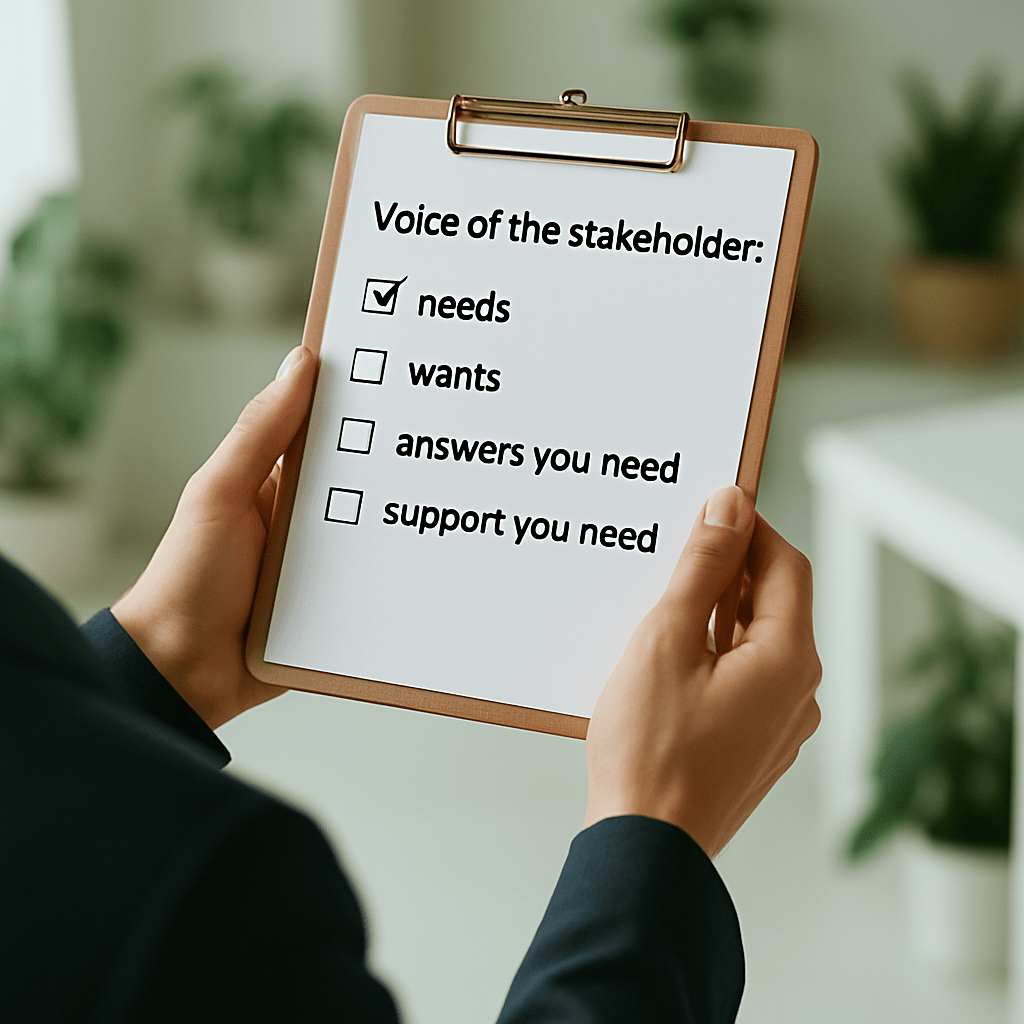
Change management serves as the stakeholder intelligence engine for any major initiative.
Yes, you may read that again.
Its focus is simple: helping the project team understand what stakeholders need to want the change, not just tolerate it.
What comes to light are their concerns, aspirations, and the kind of support they’ll need to feel ready. That intelligence then becomes practical action — who to engage, what to say, when to say it, and how to tailor plans so they land well.
It’s not “soft work tacked onto someone’s to-do list.”
It’s structured intelligence that directs and right-sizes efforts, improves timing, and reduces noise across the project.
Ignore it, and you’ll see the cost in misalignment, delayed adoption, and people quietly opting out of what they were never invited to own.
This is what this means in practice:
Change management resources conduct deep-dive stakeholder analyses – mapping who will be impacted, how, and what each group needs to move forward confidently. They provide structured insights that guide decisions, communications, and engagement plans.
If this part is not done correctly, many downstream activities will suffer from frustration and poor quality.
When intelligence turns into alignment
When that intelligence is used well, something remarkable happens: the project begins to speak a shared language.
A clear, people-centred vision emerges – one that makes sense to everyone who needs to care about it.
People can finally see themselves in the why. They understand what the change means for them, how they contribute, and what success looks like on their side of the fence.
That clarity replaces anxiety with confidence.

This is what this means in practice:
Change management resources craft compelling change stories and messaging frameworks that translate strategy into meaning. They ensure every audience – from executives to frontline employees – understands the why, what, and how in language that resonates.
Keeping the human side in sight
From there, change management quietly guards the human side of progress.
While the project team tracks milestones, change management tracks readiness — observing how people are absorbing, adjusting, and adapting to change.
It’s the pulse that keeps leadership aware of whether the organization is truly ready to move forward, not just technically prepared to go live.
When that pulse is missing, projects can look “on track” while people quietly disconnect or stay frustrated beneath the surface.
This is what this means in practice:
Change management resources create and maintain readiness dashboards, pulse surveys, and feedback loops that track engagement and confidence across stakeholder groups — giving project leadership visibility into adoption health before go-live.
Celebrating growth, not just delivery
From the beginning of a project through the end (and often beyond), change management ensures that growth is seen and celebrated – not only in the delivery of a system or process, but also in the people who made it happen.
Those moments of recognition matter.
They turn change from something to endure into something to be proud of.
It’s often in those acknowledgements that people realize they didn’t just survive the change — they grew through it.
This is what this means in practice:
Change management recognizes contributions, shares success stories, and embeds celebration rituals that sustain motivation and ownership beyond go-live.
The Simple Lesson
What that small “network experiment” revealed wasn’t that people don’t value change management — it’s that they’ve never really been told what it prevents.
When it’s missing, the waste is human — lost energy, damaged trust, and missed opportunity.
It also shows up as missed ROI, extended project timelines, and a quiet loss of leadership credibility.
Change is always happening — the real question is whether leaders guide it with intention or let it unfold on its own.
Change management brings intention and structure to the human side of progress.
It’s not about tools or templates; it’s about leadership choosing to make change with people, not to them – giving them the space, support, and clarity to understand, contribute, and grow through it.
And when people finish a project proud of what they built and how they got there, that’s when you know the work was worth doing – even if it never makes it onto the KPI dashboard.
Discover more from Readiness Game
Subscribe to get the latest posts sent to your email.
